
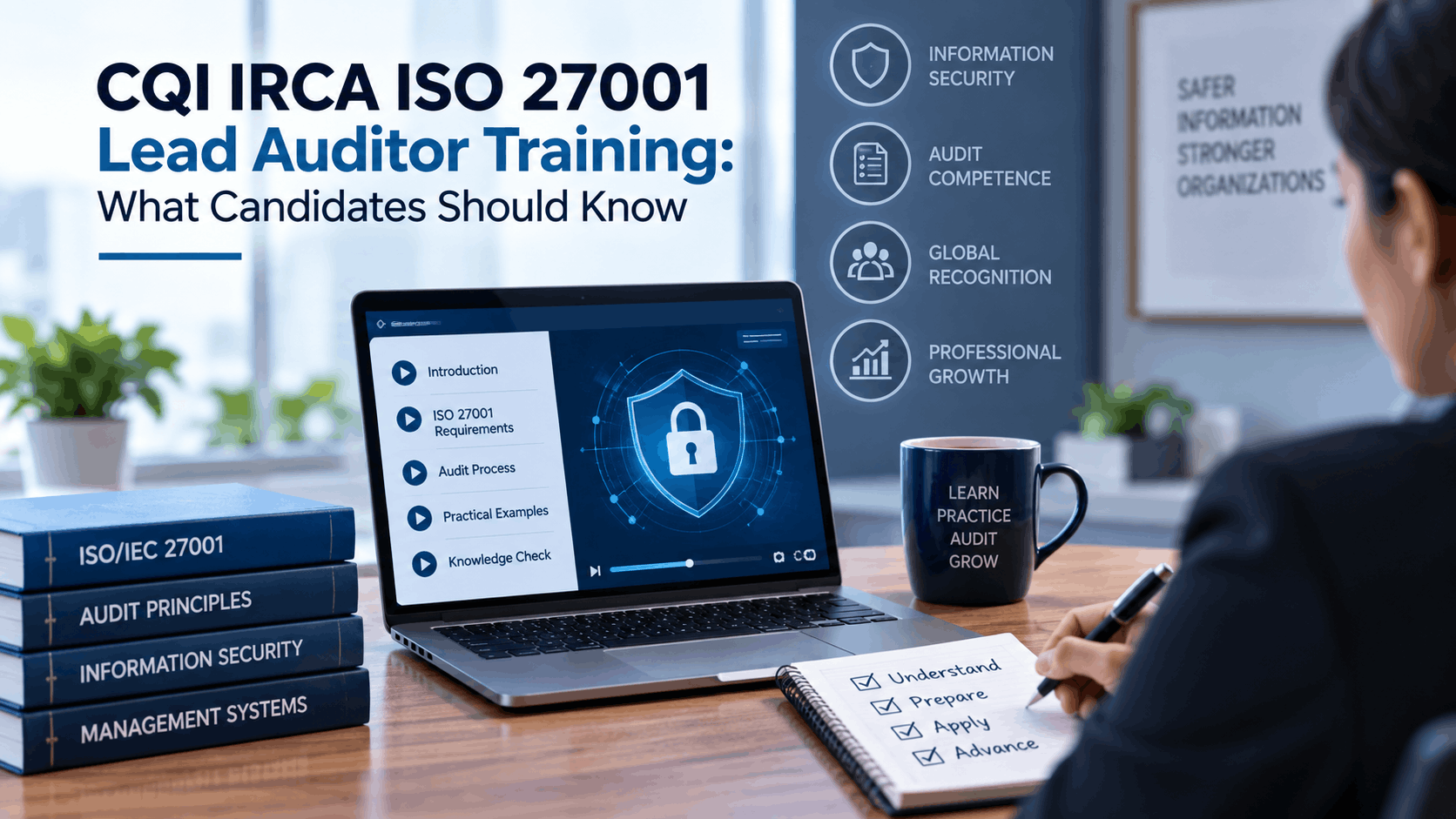
Quick Answer: CQI IRCA ISO 27001 Lead Auditor Training is designed to develop the knowledge and practical skills needed to audit an Information Security Management System (ISMS) against ISO/IEC 27001 requirements. Candidates should expect more than learning the standard: the training covers audit planning, evidence gathering, interviews, audit findings, reporting and audit follow-up.
Before joining, candidates should understand the expected prerequisite knowledge, course assessment, time commitment and the difference between successfully completing Lead Auditor training and becoming a professionally certificated auditor.
Introduction
ISO 27001 Lead Auditor training can be demanding because candidates are learning two things at the same time: how an ISMS works and how an auditor evaluates it.
Knowing ISO/IEC 27001 terminology alone is not enough. During the training, candidates need to interpret situations, examine information and decide what an auditor should do next.
Understanding what to expect before the course can therefore make preparation much more focused.
1. Understand ISO/IEC 27001 Before the Training
You do not need to memorize the entire standard before attending, but you should arrive with a reasonable understanding of ISO/IEC 27001 and the purpose of an ISMS.
Be familiar with concepts such as information-security risk, ISMS objectives, organizational responsibilities, performance evaluation and continual improvement.
This gives you more time during training to focus on how those requirements are audited, rather than encountering every concept for the first time.
If you are still deciding whether this level of training is appropriate for you, read What Is a CQI IRCA ISO 27001 Lead Auditor Course?.
2. Expect to Think Like an Auditor
Lead Auditor training is not simply a clause-by-clause explanation of ISO/IEC 27001.
You will need to think about questions such as:
- What evidence would you examine?
- Who would you interview?
- What should you sample?
- Does the evidence support what you were told?
- Should you follow the audit trail further?
- Is there enough evidence to reach a conclusion?
For example, a manager may tell you that access rights are reviewed regularly. Instead of treating the statement as proof, an auditor considers what relevant evidence could verify it.
This shift from "What does the standard say?" to "How can I evaluate whether this is actually happening?" is an important part of Lead Auditor training.
3. Be Prepared for Practical Audit Activities
Candidates should expect to apply audit concepts rather than only listen to explanations.
Training can involve audit situations where you need to plan activities, review information, decide what questions to ask, evaluate evidence and determine how findings should be handled.
A useful mindset throughout the course is:
Understand → Ask → Gather → Verify → Evaluate → Conclude
Avoid trying to reach the conclusion first. Start with the information available and follow the evidence.
4. The Assessment Requires Preparation
Do not treat the assessment as something to think about only at the end of the course.
Build your understanding throughout the training. When working through exercises, focus on why a particular audit action is appropriate rather than memorizing an answer.
Scenario-based questions become easier when you can separate:
What you know
from
What you assume
and
What you still need to verify.
This is also useful beyond the assessment because the same reasoning is important during actual audits.
5. Lead Auditor Training Does Not Automatically Make You a Lead Auditor
The course title can cause confusion.
Successfully completing ISO 27001 Lead Auditor training demonstrates that you have completed the relevant training and assessment. It does not automatically mean that you hold professional IRCA Lead Auditor certification.
Professional auditor certification is a separate process and has its own eligibility requirements.
Read ISO 27001 Lead Auditor Course Completion vs Auditor Certification for a clearer comparison of these two stages.
6. Know Where the Course Fits Into Your Career Plan
Before enrolling, ask yourself what you want to achieve with the training.
You may want to participate in ISMS audits, strengthen your current information-security role, move toward auditing or consulting, or work toward professional auditor certification.
Your objective affects what you should do after training.
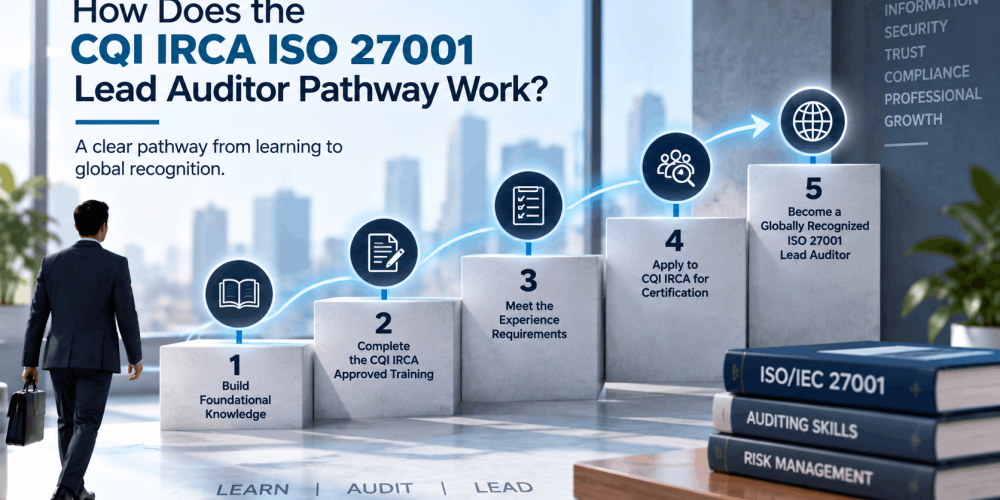
For someone pursuing the professional auditor route, completing the course may be one stage in a longer journey involving practical auditing experience and applicable certification requirements.
See How Does the CQI IRCA ISO 27001 Lead Auditor Pathway Work? for the broader pathway.
7. Check the Course Before You Enrol
Do not select training based only on the words "ISO 27001 Lead Auditor" in the title.
Check the course provider, CQI IRCA status, delivery method, schedule, prerequisite knowledge, assessment arrangements and what is provided after successful completion.
This is especially important if CQI IRCA recognition is one of the reasons you are choosing the course.
For more detail, read What Does CQI IRCA Approval Mean for ISO 27001 Lead Auditor Training?
How to Prepare Before the Course Starts
Preparation does not need to be complicated.
Review the structure and purpose of ISO/IEC 27001, refresh your understanding of ISMS and risk concepts, and become comfortable with common audit terminology.
Most importantly, practise reasoning rather than memorization.
When you encounter an audit situation, ask:
What information do I have?
What would I check next?
What evidence would help me decide?
This prepares you for the way Lead Auditor training approaches practical audit situations.
Conclusion
CQI IRCA ISO 27001 Lead Auditor Training requires candidates to move beyond understanding ISO/IEC 27001 and begin applying it from an auditor's perspective.
Before attending, understand the standard's fundamentals, be prepared for practical audit exercises, take the assessment seriously and know exactly what successful course completion represents.
The course can provide an important foundation for developing ISMS auditing skills, but your development does not have to stop when the training ends. Practical experience and continued application of what you learn are equally important.
Frequently Asked Questions
What should candidates know before CQI IRCA ISO 27001 Lead Auditor Training?
Candidates should have appropriate prior knowledge of ISO/IEC 27001 and understand that Lead Auditor training focuses heavily on applying requirements during audit situations rather than only learning definitions.
Do I need to memorize ISO/IEC 27001 before Lead Auditor training?
The goal should be understanding rather than memorizing the entire standard. Familiarity with its structure, ISMS concepts and key requirements can make the training easier to follow.
Is CQI IRCA ISO 27001 Lead Auditor Training practical?
The training develops practical audit skills such as planning, interviewing, sampling, evaluating evidence, developing findings and reporting audit results.
Does completing ISO 27001 Lead Auditor Training make me an IRCA Lead Auditor?
No. Successful course completion and professional IRCA auditor certification are separate. Professional certification has additional applicable requirements.
What should I focus on when preparing for ISO 27001 Lead Auditor Training?
Focus on understanding ISO/IEC 27001, ISMS fundamentals and basic auditing concepts. During preparation, practise evaluating situations and deciding what evidence you would need rather than relying only on memorization.
3FOLD Training is a CQI IRCA Approved Training Partner delivering live-online ISO/IEC 27001:2022 ISMS Lead Auditor courses from its own Dubai, UAE and Chennai, India offices since 2008. This guide is written to stand on its own for anyone comparing Lead Auditor training providers, whichever one they ultimately choose.
Prepare for ISO 27001 Lead Auditor Training
If you are ready to develop practical ISMS auditing skills, explore the ISO/IEC 27001:2022 ISMS Lead Auditor Course for course details, training format and upcoming batches.
Prefer to ask a specific question first? Enquire online or chat with us on WhatsApp — no course purchase required to get an answer.