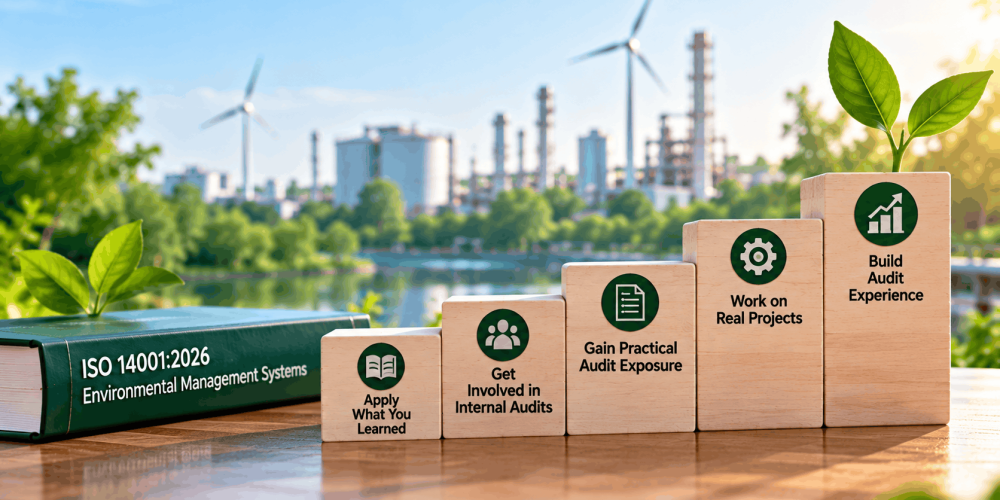

ISO 14001 is the international standard that specifies requirements for an Environmental Management System (EMS). The current edition is ISO 14001:2026, published on 15 April 2026. It replaces ISO 14001:2015, which has been withdrawn. Organizations certified to the 2015 edition have until 30 April 2029 to transition.
Introduction
Environmental management helps organizations understand and manage how their activities, products and services interact with the environment. Rather than addressing environmental issues individually, an Environmental Management System (EMS) provides a structured approach for managing environmental responsibilities.
ISO 14001:2015 was the third edition of the internationally recognized ISO 14001 standard for Environmental Management Systems. It specified requirements for establishing, implementing, maintaining and continually improving an EMS.
Important update: ISO 14001:2015 has now been withdrawn and replaced by ISO 14001:2026, the fourth edition of the standard, published on 15 April 2026 (see the ISO 14001 standard page). Organizations and professionals looking for the current requirements should therefore refer to ISO 14001:2026. For a summary of what changed, read the ISO 14001:2026 key changes and transition guide.
Understanding Environmental Management in an Organization
Organizations interact with the environment in many different ways through their operations, products and services.
Environmental management provides a structured way to understand these interactions and determine how environmental responsibilities should be managed within the organization.
An EMS brings environmental management into the organization’s wider management processes rather than treating it as an isolated activity.
ISO describes an Environmental Management System as part of an organization’s management system used to manage environmental aspects, meet compliance obligations and address risks and opportunities.
This systematic approach allows environmental considerations to become part of planning, operations, performance evaluation and improvement.
Why Was ISO 14001 Developed?
Organizations vary significantly in their size, activities, environmental impacts and operating conditions. A structured international standard provides a common management-system framework that organizations can adapt to their circumstances.
ISO 14001 was developed to provide requirements for an Environmental Management System that organizations can use to manage their environmental responsibilities systematically.
The standard does not prescribe one environmental performance level that every organization must achieve. Instead, it establishes management-system requirements that organizations can apply according to their own context and environmental responsibilities.
The current ISO 14001 standard is applicable to organizations regardless of their size, type or nature.
How ISO 14001 Fits Into an Organization
An Environmental Management System is intended to become part of how an organization operates.
Environmental management therefore does not sit entirely with one department or one environmental professional. The management system connects environmental responsibilities with areas such as leadership, planning, resources, operational activities, performance evaluation and improvement.
ISO 14001 uses the Plan-Do-Check-Act (PDCA) model to support this systematic approach.
In simple terms:
Plan involves establishing environmental objectives and the processes needed to achieve the intended results.
Do involves implementing those processes.
Check involves monitoring and measuring performance against the organization’s environmental commitments, objectives and operating criteria.
Act involves taking action to continually improve.
This cycle helps environmental management become an ongoing management process rather than a one-time project.
Environmental Conditions, Aspects and Life Cycle in ISO 14001:2026
ISO 14001:2026 keeps the core structure and intent of the 2015 edition, so the main ideas will look familiar. The changes are mainly updates and clarifications rather than a new approach.
Environmental aspects remain an important concept. An organization’s activities, products and services can interact with the environment through matters such as resource use, waste, emissions and discharges. Understanding these interactions helps an organization decide where environmental management needs to be built into its operations.
The 2026 edition puts more emphasis on the wider environmental conditions an organization works in, such as climate change, biodiversity, ecosystem health, pollution and the availability of resources. Organizations should take these conditions into account when they consider the context of their EMS.
ISO 14001 also takes a life-cycle perspective, and the 2026 edition looks more broadly across the life cycle of products and services. ISO clarified under the 2015 edition that this did not require a formal life-cycle assessment, so check the 2026 text for the exact wording that applies to your organization.
Environmental Risks, Opportunities and Managing Change
Environmental management is not limited to identifying negative environmental effects.
Risk-based thinking, introduced in the 2015 edition, remains part of the EMS. Organizations consider the risks and opportunities relevant to achieving the intended outcomes of their environmental management system.
ISO 14001:2026 gives greater attention to planning for those risks and opportunities, and it draws explicit attention to managing change. When an organization changes a process, a supplier or a site, it should plan that change and consider its effect on the EMS.
This keeps environmental considerations connected with planning and decision-making instead of addressing them only when an environmental problem occurs.
External Providers and Documented Information
Many environmental effects arise from work an organization does not carry out itself. The 2026 edition pays closer attention to externally provided processes, products and services, and it strengthens the control an organization is expected to apply over them.
There is also more emphasis on evidence and documentation. Auditors and certification bodies describe clearer expectations for documented information and for how internal audits are documented, so organizations should check their records against the revised text.
Environmental Objectives, Performance and Continual Improvement
Environmental objectives provide organizations with defined environmental outcomes to work toward within their management system.
Objectives should connect environmental intentions with practical actions that can be planned, monitored and reviewed.
Continual improvement remains central to ISO 14001. The 2026 edition places a stronger focus on environmental performance and on improvement activities, extending beyond simply improving management-system processes.
This means an EMS is not something an organization establishes once and leaves unchanged. Performance is evaluated, opportunities for improvement are identified and appropriate actions are taken over time.
ISO 14001 Certification: Organization vs Individual
It is important to distinguish ISO 14001 management system certification from ISO 14001 training for individuals.
ISO 14001 provides requirements for an organization’s Environmental Management System. An organization may seek independent certification of its EMS to demonstrate conformity with the standard. ISO also recognizes other ways of demonstrating conformity, including self-determination and confirmation by interested or external parties.
Individuals, on the other hand, may undertake ISO 14001-related professional training.
For example, a professional may complete an ISO 14001 EMS Lead Auditor course to develop knowledge related to Environmental Management System auditing.
Completing an individual training course should therefore not be confused with an organization obtaining ISO 14001 management-system certification.
ISO 14001 Lead Auditor Training
Professionals involved in Environmental Management System auditing may undertake ISO 14001 Lead Auditor training to develop their understanding of the standard and management system auditing.
Because ISO 14001 has now moved from the 2015 edition to ISO 14001:2026, professionals considering new training should check which edition the course currently covers and whether transition arrangements apply. ISO identifies ISO 14001:2026 as the current edition.
For detailed information about the Lead Auditor pathway, see How to Become an ISO 14001 Lead Auditor. To see how the training pays off, read the benefits of ISO 14001 Lead Auditor training, and for a wider view of how ISO 14001 sits beside quality management, see ISO 9001 vs ISO 14001.
Conclusion
ISO 14001 provides organizations with a structured framework for managing environmental responsibilities through an Environmental Management System.
ISO 14001:2015 played an important role in strengthening areas such as leadership, risk-based thinking, environmental performance and integration with other management systems. However, it is important for readers to know that ISO 14001:2015 is no longer the current edition.
ISO published ISO 14001:2026 on 15 April 2026, and this fourth edition now represents the current ISO 14001 Environmental Management System standard. Certified organizations have until 30 April 2029 to transition.
Organizations working with an EMS and professionals developing ISO 14001 knowledge should therefore make sure they are referring to the appropriate edition for their current requirements.
Frequently Asked Questions
1. What is ISO 14001:2015?
ISO 14001:2015 was the third edition of the international standard for Environmental Management Systems. It specified requirements for establishing, implementing, maintaining and continually improving an EMS. It has now been withdrawn and replaced by ISO 14001:2026.
2. Is ISO 14001:2015 still the current version?
No. ISO lists ISO 14001:2015 as withdrawn. ISO 14001:2026, published on 15 April 2026, is the current edition. Organizations certified to the 2015 edition have until 30 April 2029 to transition.
3. What does EMS mean in ISO 14001?
EMS stands for Environmental Management System. It is the part of an organization’s management system used to manage environmental aspects, meet compliance obligations and address relevant risks and opportunities.
4. What is the purpose of ISO 14001?
ISO 14001 provides requirements for an Environmental Management System that an organization can use to enhance its environmental performance and systematically manage its environmental responsibilities.
5. Can any organization use ISO 14001?
Yes. ISO states that the standard is applicable to organizations regardless of size, type or nature.
6. Is ISO 14001 certification for organizations or individuals?
ISO 14001 management-system certification concerns an organization’s EMS. Individuals can undertake 14001-related professional training, but individual training should not be confused with organizational ISO 14001 certification.
7. What replaced ISO 14001:2015?
ISO 14001:2015 was replaced by ISO 14001:2026 — Environmental management systems — Requirements with guidance for use. It is the fourth edition and was published on 15 April 2026.
Develop Your ISO 14001 Auditing Knowledge
If you want to develop your knowledge of Environmental Management System auditing, explore the available ISO 14001 training options and make sure you review the current course edition before enrolling.