

Introduction:
Workplace health and safety is not only about responding after an incident occurs. Organizations must identify hazards early, evaluate whether controls are effective, meet applicable OH&S requirements, and continually improve their safety performance. This creates a growing need for professionals who can assess an Occupational Health and Safety Management System in a structured and objective way.
The ISO 45001 Lead Auditor Training Course helps participants develop the knowledge and practical auditing skills required to evaluate an organization against ISO 45001 requirements. It is particularly relevant to HSE Officers, Safety Engineers, EHS Managers, QHSE professionals, internal auditors, consultants, and professionals planning to move into OH&S auditing roles.
If your goal is to understand the complete career path, you can also read our guide on how to become an ISO 45001 Lead Auditor.
Quick Answer:
ISO 45001 Lead Auditor Training helps professionals understand ISO 45001 requirements and learn how to plan, conduct, report, and follow up OH&S management system audits. The training can strengthen audit confidence, improve HSE career opportunities, and help organizations identify risks, improve compliance, reduce incidents, and build a stronger safety culture.
What Is ISO 45001 Lead Auditor Training?
The CQI IRCA certified ISO 45001 Lead Auditor Training is a 40-hour course designed to develop the competence required to audit an Occupational Health and Safety Management System. Participants learn how to apply auditing principles and procedures, evaluate objective evidence, report findings, and lead an audit team.
After successfully completing the continuous assessment and final examination, participants receive a Certificate of Achievement. Course completion is an important step in professional auditor development, although auditor registration may also require relevant education, work experience, and audit experience.
Why Organizations Value ISO 45001 Lead Auditors:
A documented OH&S management system does not automatically guarantee a safe workplace. Organizations need competent auditors who can determine whether policies, procedures, risk controls, and legal-compliance processes are actually working in practice.
- They evaluate hazard and risk controls: Lead Auditors verify whether hazards are identified, risks are assessed, and controls remain suitable and effective.
- They strengthen compliance oversight: Auditors examine how the organization identifies and addresses applicable legal and other OH&S requirements.
- They provide reliable information to management: Audit findings help leaders understand system weaknesses and make informed decisions.
- They support continual improvement: Effective audits reveal recurring issues, weak controls, and opportunities to improve OH&S performance.
- They encourage worker participation: Audits assess whether workers are consulted, involved, and able to report hazards without fear.
How the Training Prepares You for Real OH&S Audits:
The value of the training is not limited to understanding ISO 45001 clauses. It teaches participants how to apply the standard throughout the complete audit process.
- Plan the audit: Define the objectives, scope, criteria, methods, schedule, and audit-team responsibilities.
- Review documented information: Examine policies, procedures, risk assessments, legal registers, incident records, and previous audit findings.
- Conduct interviews and site observations: Speak with workers, supervisors, contractors, and management while observing actual workplace conditions.
- Collect objective evidence: Use records, interviews, observations, and sampling to determine whether controls are implemented effectively.
- Evaluate conformity: Compare evidence with ISO 45001 requirements and the organization’s own arrangements.
- Report findings: Prepare clear, evidence-based nonconformities, observations, conclusions, and recommendations.
- Follow up corrective actions: Verify whether the organization addressed the cause of the issue and reduced the likelihood of recurrence.
Top Benefits of ISO 45001 Lead Auditor Training:
1. Develop Professional OH&S Auditing Skills
The course provides a structured method for planning, conducting, and reporting audits. This helps professionals move beyond checklist-based auditing and assess whether the management system is genuinely effective.
2. Improve Hazard Identification and Risk Evaluation
Participants learn how to examine the way an organization identifies hazards, evaluates risks, and selects controls. This is especially valuable in high-risk sectors such as construction, manufacturing, oil and gas, energy, chemicals, logistics, and infrastructure.
3. Strengthen Your Understanding of ISO 45001 Requirements
Training helps professionals connect ISO 45001 requirements with real processes such as worker consultation, operational control, emergency preparedness, incident investigation, performance monitoring, and continual improvement.
4. Build Confidence in Leading Audits
Lead Auditors must communicate with different levels of an organization, ask focused questions, manage audit time, resolve disagreements, and present findings clearly. Practical exercises help participants become more confident in leading audit teams and conducting opening and closing meetings.
5. Improve the Quality of Audit Findings
A useful audit finding must be supported by objective evidence and connected to a clear requirement. The training helps participants avoid vague conclusions and write findings that management can understand and act upon.
6. Support a Proactive Safety Culture
A well-conducted audit does more than identify nonconformities. It helps an organization understand why failures occur, involve workers in improvement, strengthen controls, and prevent similar problems from recurring.
7. Expand HSE and Auditing Career Opportunities
ISO 45001 Lead Auditor Training can support progression into roles involving HSE management, internal auditing, supplier auditing, compliance, consulting, integrated management systems, and OH&S improvement.
8. Gain Skills That Apply Across Multiple Industries
ISO 45001 can be implemented by organizations of different sizes and sectors. As a result, OH&S auditing skills can remain relevant even when a professional moves from one industry to another.
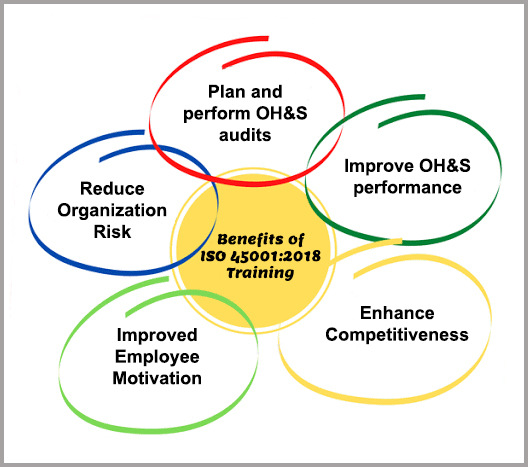
Figure 1: Benefits of ISO 45001 Lead Auditor Training
Challenges Professionals Face Without Formal Lead Auditor Training:
Workplace experience is important, but experience alone may not provide a consistent auditing method. Professionals without structured Lead Auditor Training may struggle with:
- Relying too heavily on audit checklists
- Reviewing documents without verifying actual workplace conditions
- Writing findings without sufficient objective evidence
- Confusing an observation with a nonconformity
- Connecting workplace hazards and controls with ISO 45001 requirements
- Evaluating the effectiveness of corrective actions
- Leading interviews, opening meetings, and closing meetings confidently
Formal training creates a disciplined and repeatable approach, making audit results more consistent, credible, and useful to management.
Real Business Impact of ISO 45001 Lead Auditor Training:
The strongest benefit of Lead Auditor Training is seen when improved audit competence leads to better decisions and stronger workplace controls.
- Hazard identification: Previously overlooked risks may be identified before they contribute to an incident.
- Operational controls: Unsafe work practices, weak permit systems, or ineffective safeguards can be corrected.
- Worker consultation: Employees become more involved in reporting hazards and improving controls.
- Contractor management: Safety expectations and monitoring become more consistent across external workers.
- Incident investigation: The organization can address underlying system failures rather than only immediate causes.
- Corrective-action follow-up: Recurring incidents and repeated audit findings can be reduced through effective verification.
Practical Example
During an internal audit, a trained Lead Auditor may observe that employees are wearing personal protective equipment, but machine-guarding inspections are not consistently recorded. Instead of treating PPE use as sufficient evidence, the auditor reviews the complete control process, including maintenance records, employee awareness, supervision, and follow-up actions. This broader evaluation may reveal a system weakness before it contributes to an incident.
Career Opportunities After ISO 45001 Lead Auditor Training:
Completing the training does not automatically guarantee employment or professional auditor registration. However, it can strengthen the knowledge and competence required for roles such as:
- ISO 45001 Lead Auditor
- OH&S Internal Auditor
- HSE Officer or Senior HSE Officer
- Safety Engineer
- EHS or QHSE Manager
- Compliance Manager
- OH&S Consultant
- Supplier Auditor
- Integrated Management System Auditor
Professionals who already understand ISO 9001 or ISO 14001 may also use ISO 45001 Lead Auditor Training to broaden their integrated management system auditing capabilities.
Is ISO 45001 Lead Auditor Training Worth It?
The training is most valuable for professionals whose current or future responsibilities include workplace safety, OH&S compliance, internal audits, supplier audits, management-system implementation, or continual improvement.
Its value should not be measured only by the certificate received. The stronger benefit is the ability to evaluate an OH&S management system systematically, communicate audit findings clearly, and contribute to safer and more reliable operations.
The training may be suitable for you if you want to:
- Move from general HSE responsibilities into auditing
- Lead or support ISO 45001 internal audits
- Build competence in evaluating workplace controls
- Expand into QHSE or integrated management system roles
- Strengthen your professional credibility in OH&S management
Frequently Asked Questions
1. I work as an HSE Officer. Will ISO 45001 Lead Auditor Training help my career?
It can strengthen your understanding of OH&S management systems and help you develop practical auditing, evidence-evaluation, reporting, and communication skills. These abilities may support progression into senior HSE, compliance, internal audit, QHSE, or consulting responsibilities.
2. Do I need previous auditing experience before joining?
Previous auditing experience is helpful but is not always required. A basic understanding of occupational health and safety and ISO 45001 requirements can make the training easier to follow. Entry requirements may vary by training provider.
3. I already work in safety. What additional value will the training give me?
Safety experience helps you identify workplace hazards, while Lead Auditor Training teaches you how to assess the complete management system in a structured way. This includes audit planning, sampling, interviewing, evaluating evidence, reporting findings, and verifying corrective action.
4. Will the course help me conduct internal ISO 45001 audits?
Yes. The audit principles and techniques covered during Lead Auditor Training can be applied during internal audits. The course also develops broader audit-team and audit-management skills beyond those usually included in basic Internal Auditor Training.
5. I already completed ISO 9001 or ISO 14001 Lead Auditor Training. Should I add ISO 45001?
It may be valuable if your role includes workplace safety or integrated management systems. ISO 45001 adds OH&S-specific knowledge relating to hazards, worker participation, operational controls, emergency preparedness, incident management, and safety performance.
6. Which industries value ISO 45001 Lead Auditor skills?
These skills are relevant in manufacturing, construction, oil and gas, logistics, engineering, energy, chemicals, pharmaceuticals, healthcare, infrastructure, mining, and other industries where workplace health and safety is a significant responsibility.
7. Will completing the course make me a certified third-party auditor?
Completing a recognized course is an important step, but professional auditor certification or grade may also require relevant education, work experience, audit experience, and a separate application to the applicable certification body. Course completion alone should not be treated as automatic auditor registration.
8. How should I choose an ISO 45001 Lead Auditor Training provider?
Review the course recognition, tutor experience, training duration, delivery method, practical audit exercises, assessment process, participant support, and whether the course matches your professional objective. Do not choose a provider based only on the lowest fee.
Conclusion:
ISO 45001 Lead Auditor Training connects occupational health and safety knowledge with a disciplined auditing method. It helps professionals evaluate whether hazards are controlled, requirements are met, workers are involved, and the OH&S management system is capable of supporting continual improvement.
For HSE professionals, the course can provide more than a qualification. It can build the practical ability and confidence needed to conduct meaningful audits, communicate reliable findings, and help organizations create safer workplaces.
To learn more, explore the CQI IRCA Certified ISO 45001 Lead Auditor Training Course, review the course format and eligibility, or contact 3FOLD Training for guidance.
Contact us through the contact form, WhatsApp, or Email.