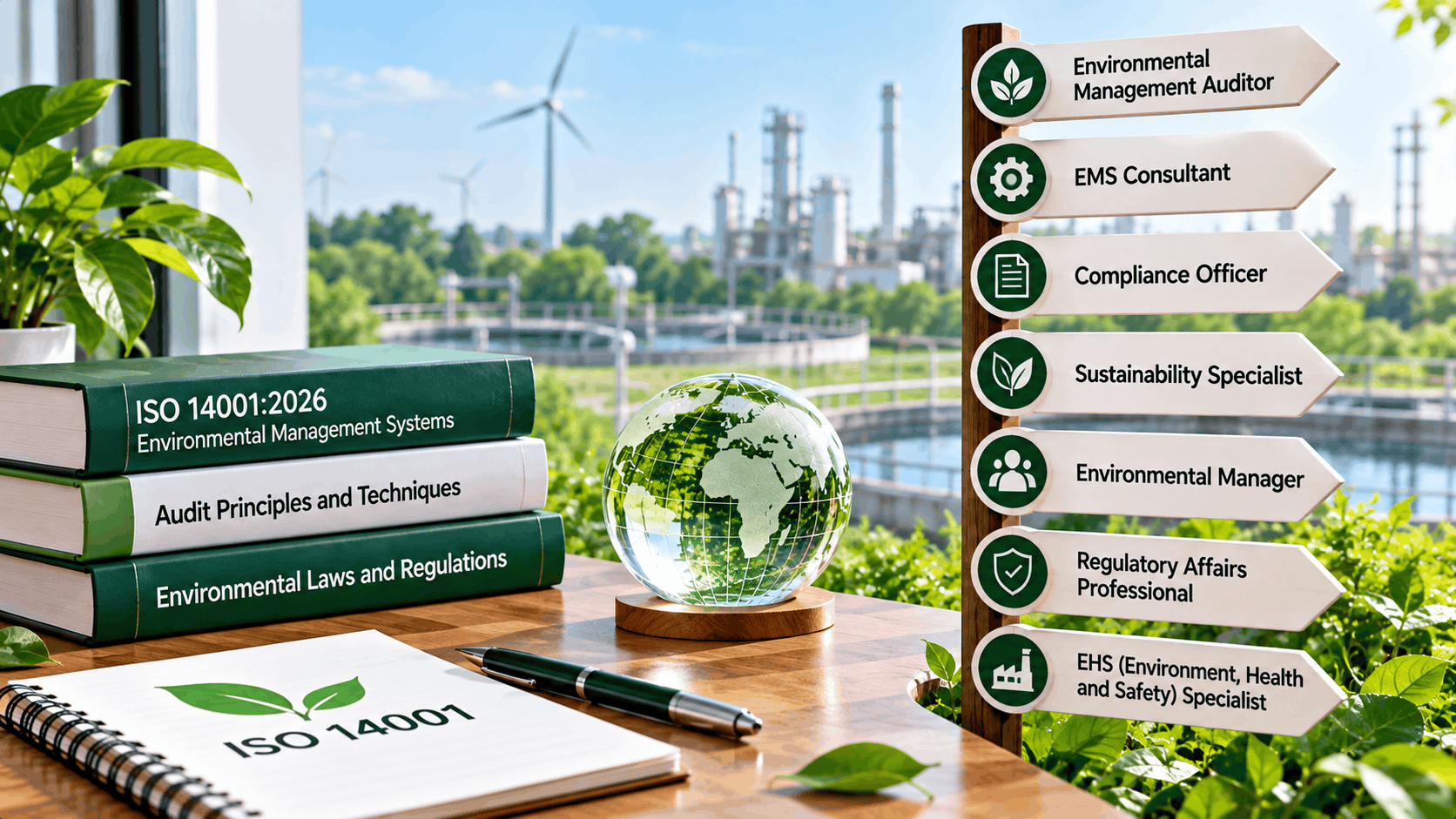
An ISO 14001 Lead Auditor course prepares you for work that involves auditing environmental management systems: internal auditing inside an organization, supplier or second-party auditing, certification body auditing, and consulting or advisory roles. The course certificate is a step toward these roles, but the Lead Auditor credential itself requires audit experience gained afterward, and hiring decisions rest with employers.
Introduction
People often ask what job the ISO 14001 Lead Auditor course leads to, as if it were a single path. In practice it opens several, and the right one depends on where you are starting from and how much audit experience you build afterward.
This article describes the main types of work, what each involves, and what to expect at each stage, without promising outcomes that no training provider can control.
ISO 14001:2026 Lead Auditor
Which auditing work suits you first?
Answer three questions. You get two ideas to explore, not a job promise.
For planning and practice only. CQI and IRCA set and apply the real requirements, so confirm the current criteria on the official CQI and IRCA website before you act on any result.
Understanding EMS requirements is only one part of lead auditing. You also need to know how to evaluate environmental aspects, audit implementation, assess evidence and report audit findings.
What does a Lead Auditor actually do?
An ISO 14001 Lead Auditor plans, conducts, evaluates, and reports on audits of an environmental management system (EMS), and as team leader, directs an audit team. The work is about gathering evidence and comparing it with audit criteria, not about fixing the system.
The skills involved are transferable: interviewing, sampling evidence, writing clear findings, and communicating with people at different levels of an organization. Those skills carry value in many roles beyond audit titles.
Understanding the framework underneath helps, so a plain explanation of the ISO 14001 environmental management system is useful background if you are still new to it.
Auditors also need a mix of technical understanding and people skills. You will talk to operators, supervisors, and senior managers in the same day, and the quality of your questions determines the quality of your evidence.
Reading about the role is useful, but the clearest picture comes from watching an audit. If your organization runs internal audits, ask to observe one as a first step, and notice how the auditor opens the meeting, asks questions, and closes with findings.
What roles use ISO 14001 auditing inside an organization?
Many professionals use the training inside their own employer. Environment, health and safety (EHS) managers, sustainability and compliance officers, and quality managers often lead or support internal EMS audits as part of their existing role.
ISO 14001:2026 EMS Lead Auditor (PR376)40 hoursVILTMock exams aligned to IRCA formatExam registration handled for you
See what's includedFor these professionals, the course is less about changing jobs and more about doing the current job with more credibility. Leading an internal audit programme is a visible responsibility and the training gives you the method to do it well.
This is often the most realistic first step, because you can build audit experience inside a workplace that already trusts you.
If you work in a regulated industry, your audit knowledge also helps you follow compliance processes more closely. Seeing how an auditor tests whether legal requirements are identified and evaluated changes how you manage them yourself.
If your job title does not mention audit at all, that is normal. Many people carry audit responsibilities inside broader roles, and the course gives them a structured method for work they were already doing informally.
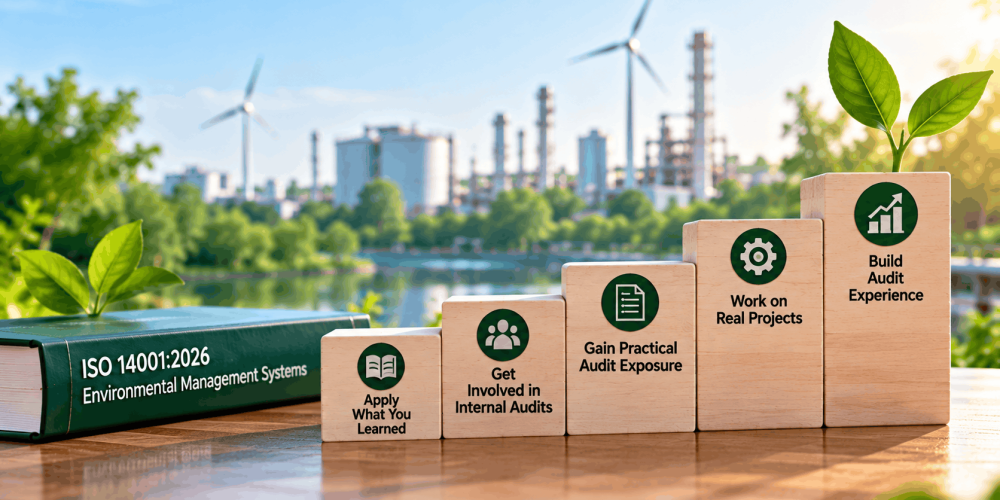
The course opens several paths. Audit experience decides how far along each one you travel.
What about supplier and certification audit work?
Supplier or second-party auditing means auditing a supplier on behalf of a customer organization, often to check that environmental expectations are met. Organizations that manage large supply chains may use auditors for this work.
Certification body auditing is the third-party route: auditing organizations for certification to ISO 14001. These roles usually have their own entry requirements, which are set by the certification body, so confirm them directly with the body you are interested in.
Neither route is guaranteed by completing a course. Both depend on experience, competence evidence, and what employers need at the time.
Supplier auditing often suits people who enjoy travel or working with different organizations, while certification work suits those who prefer a defined, structured audit environment. Think about the working pattern you want before choosing a direction.
For both routes, evidence of competence matters. Keep your course certificate, your audit log, and any references from audit leads together, since employers and certification bodies typically ask for them.
Where do consulting and advisory roles fit?
Consultants help organizations build, maintain, and improve environmental management systems, and auditing knowledge strengthens that work. Understanding how an auditor evaluates a system helps a consultant prepare clients properly.
Some professionals combine roles, for example working as an EHS manager while auditing suppliers on the side. The course supports that kind of flexibility because the skills apply across industries.
Read the benefits of ISO 14001 Lead Auditor training for a broader view of how the training can support a career.
A consultant who understands auditing can also explain to a client why a particular finding matters and what evidence would resolve it. That practical insight is valuable and difficult to gain from reading alone.
Industry knowledge can also set you apart. An auditor who understands manufacturing processes, construction sites, or logistics operations can ask more precise questions than one who relies on the standard alone.
How do you move from the course toward these roles?
Start by pairing the course certificate with audit practice. The IRCA Lead Auditor grade needs audit experience gained after the course, so any route that lets you audit, even in a supporting role, builds your record.
Then match your goal to the right route. how to become an ISO 14001 Lead Auditor explains the stages from training to certification, which you can use to plan which role to target first.
Check the CQI and IRCA website for current membership grades, since these affect how you present your qualifications to employers.
Be patient with timing. Most people build experience over a period of years, moving from supporting roles to leading audits, and employers value a documented track record more than a single certificate.
Frequently asked questions
What jobs can I get after an ISO 14001 Lead Auditor course?
The course prepares you for work involving environmental management system audits, such as internal auditing, supplier auditing, certification body auditing, and consulting. Outcomes depend on your experience and on employers.
Can I get a job immediately after ISO 14001 Lead Auditor training?
The course is a step toward auditing roles, not a guarantee of one. Hiring decisions rest with employers, and the IRCA Lead Auditor grade requires audit experience gained after the course.
Is an ISO 14001 Lead Auditor course useful for EHS managers?
Yes. EHS and sustainability professionals often lead internal EMS audits, and the course gives them a recognized audit method.
What is the difference between internal and certification body auditing for ISO 14001?
Internal auditing is done inside an organization on its own system, while certification body auditing is third-party auditing for certification. Certification bodies set their own entry requirements.
Do I need IRCA certification to work as an ISO 14001 auditor?
Requirements vary by employer and certification body. Confirm what a specific employer or body expects before assuming.
Does the ISO 14001 Lead Auditor course guarantee a job?
No. 3FOLD Training prepares learners, but employment depends on experience, competence, and employer decisions.
Where 3FOLD Training fits in
3FOLD Training is a CQI and IRCA Approved Training Partner (ATP 6039853) and KHDA-licensed provider based in Dubai, running the ISO 14001:2026 EMS Lead Auditor course as live online (VILT) training, with LMS access, a case-study audit simulation, and exam registration handled for learners. Check the course page for current batch dates.
Ready to Explore ISO 14001:2026 EMS Lead Auditor Course?
Review the ISO 14001:2026 EMS Lead Auditor course information and upcoming training schedule, or contact the team if you have questions about the training.