

Quick Answer: Completing an ISO 27001 Lead Auditor Course and becoming a certified auditor are not the same thing. Course completion shows that you have successfully completed relevant auditor training and its required assessment. Auditor certification is a separate professional recognition process that may require qualifying training, relevant work experience, audit experience and evidence that you meet the requirements of the certification grade.
In simple terms: the course develops your auditing knowledge and skills; auditor certification recognizes that you meet broader professional requirements.
Introduction
"After completing an ISO 27001 Lead Auditor Course, am I officially a Lead Auditor?"
This is one of the most important questions for candidates to understand before enrolling.
The words Lead Auditor Course can make it sound as though passing the course automatically gives someone professional Lead Auditor status. In practice, training and professional auditor certification serve different purposes.
Understanding the difference helps you know exactly what you receive after training and what additional steps may be required if professional auditor certification is your goal.
What Do You Receive After Completing an ISO 27001 Lead Auditor Course?
When you successfully complete an eligible ISO/IEC 27001 Lead Auditor Course, you receive evidence of successful course completion according to the applicable training and assessment requirements.
The course is designed to develop skills such as audit planning, conducting audit activities, interviewing, sampling, evaluating objective evidence, developing findings, reporting and audit follow-up.
This training can form an important part of your professional auditor-development pathway.
To understand the training itself in more detail, read What Is a CQI IRCA ISO 27001 Lead Auditor Course?.
Does Course Completion Make You a Certified Lead Auditor?
No.
Completing Lead Auditor training does not, by itself, mean that you have obtained professional auditor certification.
Think of the two stages separately:
Lead Auditor Course → Training and assessment
Auditor Certification → Professional recognition against certification requirements
Professional certification considers requirements beyond simply attending and successfully completing a course.
This distinction is particularly important when writing your CV or LinkedIn profile. Your description should accurately reflect whether you have completed Lead Auditor training or separately hold a particular professional auditor certification.
What Is Auditor Certification?
Auditor certification is a separate process through which a certification body evaluates whether an applicant meets the requirements for a particular auditor grade or scheme.
Depending on the certification being pursued, requirements can include recognized training, relevant professional experience and qualifying audit experience.
This means two people who successfully complete the same ISO 27001 Lead Auditor Course may be at very different stages professionally.
One may be beginning to build practical audit experience, while another may already have substantial auditing experience and be preparing to apply for an appropriate professional certification grade.
Why Is Audit Experience Important?
A training course can teach you how auditing should be performed, but professional auditing also requires applying those skills in actual audit situations.
Real audits require judgement.
An auditor may need to decide which evidence to sample, how far to follow an audit trail, whether additional evidence is required and whether the evidence obtained supports a particular conclusion.
That capability develops through a combination of structured training and practical experience.
This is why completing a Lead Auditor course should be viewed as an important milestone rather than automatically the final step in becoming a professional auditor.
Where Does CQI IRCA Fit In?
CQI IRCA Certified Training and IRCA auditor certification are related, but they should not be treated as the same thing.
A CQI IRCA Certified Lead Auditor Course relates to your training.
IRCA auditor certification relates to your professional certification status and requires a separate application against the applicable certification requirements.
What Should You Do After Completing the Course?
Your next step depends on your objective.
If you are new to auditing, focus on applying what you learned and developing relevant practical audit experience. If you already work with an ISMS, you may be able to strengthen your experience by participating in appropriate audit activities within your professional role.
If your goal is professional auditor certification, check the current requirements for the certification scheme and grade you intend to pursue. This will help you identify the experience and audit evidence you still need rather than assuming that course completion alone is sufficient.
Course Completion vs Auditor Certification at a Glance
| ISO 27001 Lead Auditor Course Completion | Auditor Certification |
|---|---|
| Focuses on training | Focuses on professional recognition |
| Develops auditing knowledge and skills | Evaluates eligibility against certification requirements |
| Includes course assessment requirements | Has a separate application/certification process |
| Can support your auditor-development pathway | May require relevant audit and professional experience |
| Does not automatically certify you as a professional Lead Auditor | Confirms the certification grade awarded to you |
Conclusion
Completing an ISO 27001 Lead Auditor Course and becoming a professionally certified auditor are two different milestones.
The course gives you structured training in how to audit an Information Security Management System. Professional auditor certification goes further by assessing whether you meet the requirements of a particular certification scheme and grade.
If your long-term goal is to become an ISO 27001 auditor, think of the pathway as:
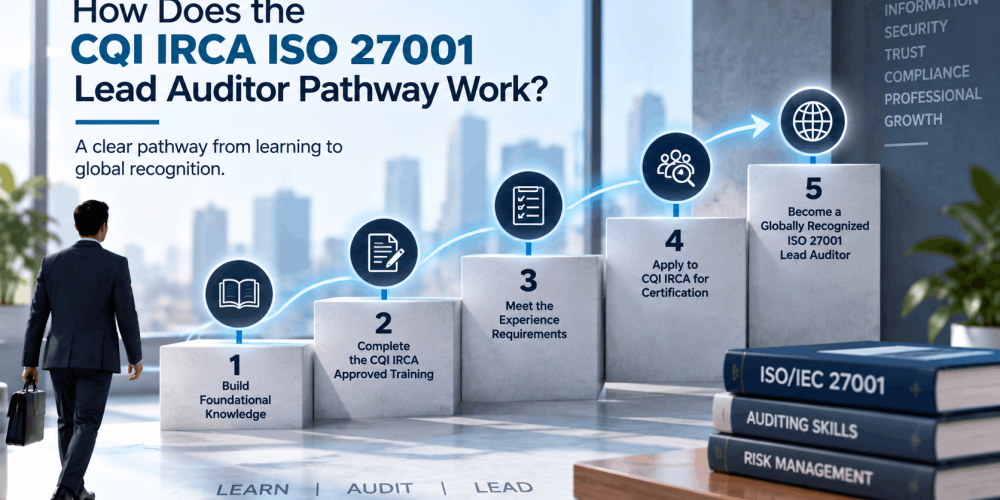
Learn → Complete Training → Build Audit Experience → Meet Certification Requirements → Apply for Certification
Understanding this distinction helps you choose the right training and plan what comes next.
Frequently Asked Questions
Does passing an ISO 27001 Lead Auditor Course make me a certified Lead Auditor?
No. Successfully completing the course demonstrates completion of relevant Lead Auditor training. Professional auditor certification is a separate process with additional requirements.
Can I put ISO 27001 Lead Auditor Course completion on my CV?
Yes, but describe the qualification accurately. Course completion should not be presented as professional auditor certification unless you separately hold that certification.
Do I need audit experience after completing an ISO 27001 Lead Auditor Course?
If your goal is a professional auditor certification that requires qualifying audit experience, you will need to meet the applicable experience requirements in addition to training.
Is CQI IRCA course certification the same as IRCA auditor certification?
No. CQI IRCA Certified Training relates to the training course, while IRCA auditor certification relates to an individual's professional certification status.
What should I do after completing ISO 27001 Lead Auditor training?
Apply the knowledge you gained, develop relevant audit experience and review the current requirements for the professional certification grade you want to pursue.
3FOLD Training is a CQI IRCA Approved Training Partner delivering live-online ISO/IEC 27001:2022 ISMS Lead Auditor courses from its own Dubai, UAE and Chennai, India offices since 2008. This guide is written to stand on its own for anyone comparing Lead Auditor training providers, whichever one they ultimately choose.
Develop Your ISO 27001 Auditing Skills
If you are preparing to build your ISMS auditing knowledge, explore the ISO/IEC 27001:2022 ISMS Lead Auditor Course to understand the training, assessment and skills developed before planning your next step.
Prefer to ask a specific question first? Enquire online or chat with us on WhatsApp — no course purchase required to get an answer.