

Quick Answer
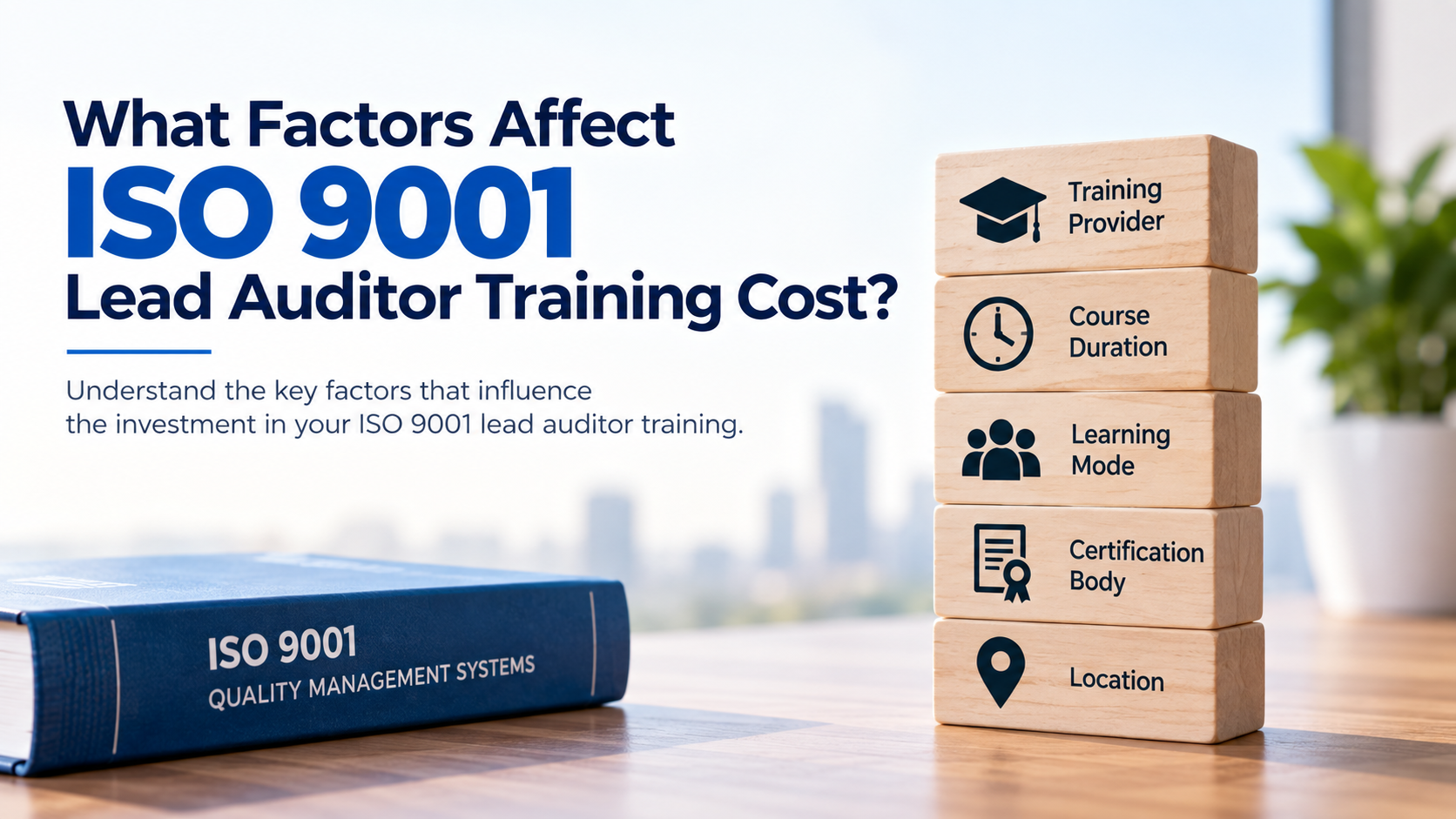
The main factors affecting ISO 9001 Lead Auditor training cost are course delivery, trainer involvement, course recognition, assessment arrangements and class size. Location, learning resources and customised delivery may also influence the quotation. Understanding these differences helps you evaluate a course without assuming that the most expensive option is the most suitable.
Why Does ISO 9001 Lead Auditor Training Cost Vary?
Courses carrying the same title do not always offer the same learning experience. One programme may provide scheduled teaching with supervised audit exercises, while another may rely more heavily on independent study.
Training organisations also have different staffing, technology and administrative requirements. These differences help explain why quotations vary, even when programmes cover similar auditing topics.
To understand the cost, look at how the course is organised and delivered—not just its name.
Training Format: Online, Classroom or In-House
The delivery format affects the resources required to run a programme.
Classroom training involves a physical venue, teaching equipment and arrangements for the instructor to attend. Live online training requires a virtual classroom platform and support for remote participation.
Self-paced learning has a different structure, with costs associated with developing digital lessons, maintaining access and providing any tutor assistance.
In-house training is arranged for an organisation's team rather than individual participants joining a public session. It may require dedicated scheduling and preparation.
These are recognised delivery options within the training market, although individual courses may not be offered in every format. ISO 9001 training delivery options
Online delivery can remove the need to travel, but it does not automatically mean a lower course quotation.
Trainer Experience and Teaching Support
Instructor-led training requires more than the time spent presenting lessons.
A trainer may prepare learning activities, supervise group work, review participant responses and explain how auditing principles apply to practical situations. The level of involvement can influence the resources needed to deliver the programme.
Relevant professional experience may also affect how providers recruit and compensate their trainers.
When reviewing an offer, consider how participants interact with the instructor. Access to meaningful feedback is more informative than a broad statement about trainer availability.
Course Recognition and Quality Assurance
Course recognition can influence training costs because a provider may need to maintain approval, demonstrate compliance with scheme requirements and undergo quality monitoring.
However, the significance of recognition depends on the purpose of the training. Someone following a particular professional development route may need a programme accepted for that route.
Check the recognition attached to the specific course rather than relying solely on the organisation's name or promotional wording.
Recognition is an important consideration, but it should not replace a review of the actual learning arrangements.
Course Duration and Learning Structure
The amount of scheduled instruction affects tutor time and delivery requirements. Additional workshops or preparatory modules may also change the structure of a training package.
Nevertheless, the number of calendar days does not tell the whole story. A programme delivered over several shorter sessions may have a different timetable from one organised into consecutive full days.
Consider the scheduled learning hours, independent preparation and assessment commitment together.
A longer timetable is not automatically evidence of more comprehensive training.
Practical Audit Exercises
Developing audit skills involves applying knowledge to evidence, interviews and findings.
Practical learning may include simulated audits, document reviews, team activities and exercises in writing nonconformity statements. Preparing these activities and providing feedback requires resources.
Established auditor programmes use methods such as tutorials, role-playing and group discussion to support learning. Practical auditor training methods
The value comes from how effectively participants use the activities—not simply from the number of exercises advertised.
Class Size and Individual Attention
Participant numbers influence how delivery expenses are distributed.
A dedicated instructor teaching a small group may represent a different cost per participant from the same instructor teaching a larger group. Providers may also need additional arrangements to manage activities when enrolment increases.
From a learner's perspective, class size matters because it can affect discussion time and opportunities for feedback.
Neither a small nor a large group guarantees a particular outcome. The important point is whether the teaching approach supports active participation.
Assessment and Examination Arrangements
Assessment can involve technology, supervision and administration beyond the teaching sessions.
Depending on the course, the provider may need to manage identity checks, examination access, marking, result records and assessment queries. These requirements can influence the overall training cost.
Examination arrangements should therefore be considered part of the programme's delivery model, not an unrelated administrative detail.
Ask how assessment is conducted and what responsibilities remain with the participant.
Learning Materials and Platform Access
Training resources can range from downloadable notes to structured digital learning environments.
Developing and updating case studies, practice activities and supporting materials creates ongoing work. A learning platform may also require maintenance and participant support.
Access arrangements differ between programmes. Some resources may be available only during the scheduled course, while others remain accessible afterwards.
Evaluate whether the materials support preparation, participation and later review rather than judging the package by the volume of documents supplied.
Location and Currency
Where a training organisation operates can affect its staffing expenses, venue costs and business overheads.
A programme delivered internationally may involve additional coordination. For overseas participants, the charging currency and payment arrangements may also affect the final amount paid.
These regional differences explain some variation in ISO 9001 Lead Auditor course costs without necessarily indicating a difference in course quality.
Compare the delivery and inclusions before drawing conclusions from location alone.
Customised Training for Organisations
A standard public programme generally uses an established timetable and prepared activities.
An employer may instead request examples connected to its operations, delivery around shift patterns or sessions reserved for a particular team. Meeting those requirements can involve additional planning and adaptation.
Customised training is most useful when the requested changes serve a clear learning need.
The quotation should distinguish dedicated preparation from the activities already included in the standard programme.
How to Evaluate the Cost Against Your Needs
Start with the reason for taking the course. Your priorities may include a particular recognition scheme, instructor interaction, practical auditing development or a timetable compatible with work.
Then review whether the programme offers those features.
Useful questions include:
- Does the delivery method suit how you learn?
- Is the course recognition relevant to your intended route?
- How much supervised practice is provided?
- What assessment arrangements apply?
- Will the timetable allow you to participate fully?
This approach keeps the decision focused on suitability rather than price alone.
Frequently Asked Questions
What Affects ISO 9001 Lead Auditor Training Cost?
The quotation reflects teaching format, instructor input, assessment administration and learning resources. Participant numbers and delivery location can introduce further differences.
Is Online ISO 9001 Lead Auditor Training Cheaper Than Classroom Training?
Online attendance may reduce travel and accommodation expenses, but the training itself is not necessarily cheaper. Live tuition and assessment support still require staffing and technology.
Why Can CQI and IRCA Certified ISO 9001 Lead Auditor Courses Have Different Costs?
Recognised programmes can differ in scheduling, delivery location, class size and the support included. Course recognition does not mean every provider offers an identical training package.
Does CQI and IRCA Course Recognition Influence ISO 9001 Lead Auditor Training Cost?
Approval and ongoing quality assurance can contribute to a provider's operating expenses. However, recognition is only one influence and does not determine the quotation by itself.
Can Group Bookings Lower ISO 9001 Lead Auditor Course Costs?
Sharing delivery resources across a team may reduce the amount charged per learner. Additional customisation or dedicated scheduling can offset that saving.
Does a Higher ISO 9001 Lead Auditor Training Cost Mean Better Quality?
A higher quotation is not proof of better instruction. Evaluate relevant course recognition, tutor interaction, practical exercises and assessment arrangements alongside the cost.
Conclusion
ISO 9001 Lead Auditor training cost is shaped by the resources required to teach, support and assess participants. Delivery format, trainer involvement, recognition and practical learning are central considerations, while location and customisation can introduce further differences.
Understanding those factors allows you to assess a quotation on its merits and select training that matches your learning objectives.
Ready to Join the ISO 9001 Lead Auditor Course
Send us your group size and preferred format and we'll give you a clear fee breakdown for the ISO 9001 Lead Auditor course to compare against other providers. You can also reach us on WhatsApp with any questions.