
ISO 9001 vs ISO 14001: What's the Difference?
Compare ISO 9001 and ISO 14001, understand their different objectives, and choose the right management system or Lead Auditor course for your professional goals.
Organizations worldwide implement ISO standards to improve performance, reduce risks, and meet customer and stakeholder expectations. Among the most widely adopted standards are ISO 9001, which focuses on Quality Management Systems (QMS), and ISO 14001, which focuses on Environmental Management Systems (EMS).
Although both standards follow the same Annex SL structure and share several common management system principles, they address different business objectives.
If you are considering an ISO Lead Auditor course or your organization plans to implement an ISO management system, understanding the differences between ISO 9001 and ISO 14001 will help you make an informed decision.
Quick answer: ISO 9001 helps organizations consistently deliver products and services that meet customer and regulatory requirements by improving quality management processes. ISO 14001 helps organizations identify, manage, monitor, and reduce their environmental impacts while improving environmental performance and supporting sustainability objectives.
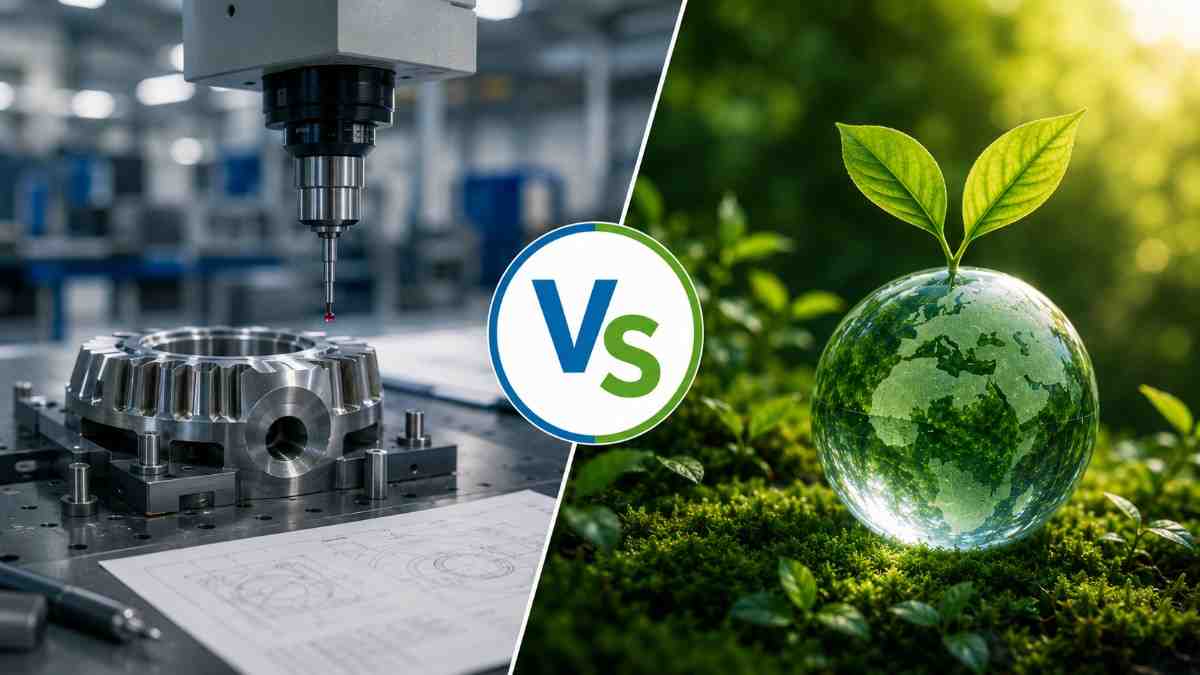
In simple terms: ISO 9001 = Quality. ISO 14001 = Environment.
ISO 9001
Focuses on quality management, customer satisfaction, process consistency, and continual improvement.
ISO 14001
Focuses on environmental performance, compliance obligations, environmental risks, and sustainability.
ISO 9001 vs ISO 14001 at a Glance
| Feature | ISO 9001 | ISO 14001 |
|---|---|---|
| Focus | Quality Management | Environmental Management |
| Primary Objective | Customer satisfaction and continual improvement | Environmental protection and sustainability |
| Standard Type | Quality Management System (QMS) | Environmental Management System (EMS) |
| Applicable To | Any organization | Any organization |
| Key Stakeholders | Customers, regulators, suppliers | Regulators, communities, customers, environmental authorities |
| Main Risk | Poor quality and customer dissatisfaction | Environmental impacts and legal compliance |
What Is ISO 9001?
ISO 9001 is the world's most widely recognized standard for Quality Management Systems. It provides a framework that helps organizations consistently deliver products and services that meet customer expectations while improving operational efficiency.
The standard is built around principles such as customer focus, leadership, process approach, evidence-based decision-making, and continual improvement. Professionals who want to develop competence in auditing these requirements can consider an ISO 9001 Lead Auditor Course Online.
Organizations implementing ISO 9001 aim to:
- Improve customer satisfaction
- Standardize business processes
- Reduce defects and rework
- Increase operational efficiency
- Strengthen risk-based thinking
- Enhance continual improvement
ISO 9001 is applicable to organizations of all sizes and sectors, including manufacturing, healthcare, education, construction, logistics, IT, finance, and government.
What Is ISO 14001?
ISO 14001 specifies the requirements for an Environmental Management System (EMS). It enables organizations to identify environmental aspects, manage environmental risks, comply with legal obligations, and improve environmental performance.
The standard supports organizations in minimizing their environmental footprint while integrating environmental considerations into business operations. Professionals working in environmental management, compliance, or sustainability can build relevant auditing competence through an ISO 14001 Lead Auditor Course Online.
Organizations implementing ISO 14001 typically seek to:
- Reduce waste
- Improve resource efficiency
- Prevent pollution
- Meet environmental compliance obligations
- Improve sustainability performance
- Strengthen environmental governance
Like ISO 9001, ISO 14001 can be applied by organizations of any size and industry.
Key Differences Between ISO 9001 and ISO 14001
Purpose
ISO 9001 improves quality management and customer satisfaction. ISO 14001 improves environmental performance and helps reduce negative environmental impacts.
Primary Focus
ISO 9001 focuses on products, services, customers, and process effectiveness. ISO 14001 focuses on aspects, impacts, compliance, and sustainability.
Who Benefits?
ISO 9001 supports quality-driven organizations, while ISO 14001 supports organizations seeking stronger environmental control and responsibility.
Purpose
The primary objective of ISO 9001 is to improve quality management and customer satisfaction. Organizations use the standard to create consistent processes, reduce errors, and continually improve products and services.
ISO 14001 focuses on environmental performance. It helps organizations understand how their activities affect the environment and establish controls to reduce negative impacts.
Primary Focus
ISO 9001 Emphasizes:
- Product quality
- Service quality
- Customer satisfaction
- Process effectiveness
- Continual improvement
ISO 14001 Emphasizes:
- Environmental aspects
- Environmental impacts
- Compliance obligations
- Resource conservation
- Pollution prevention
- Sustainability
Who Benefits?
Organizations pursuing better quality, fewer customer complaints, and improved operational consistency often implement ISO 9001.
Organizations aiming to reduce environmental impacts, improve sustainability, and demonstrate environmental responsibility typically implement ISO 14001. Many organizations implement both standards because quality and environmental performance complement each other.
Common Requirements
Despite their different objectives, both standards share many common elements due to the Annex SL high-level structure.
Both require organizations to:
- Understand organizational context
- Demonstrate leadership commitment
- Identify risks and opportunities
- Establish objectives
- Provide adequate resources
- Conduct internal audits
- Perform management reviews
- Drive continual improvement
This common structure makes it easier to integrate multiple ISO management systems.
Detailed Comparison: ISO 9001 vs ISO 14001
| Criteria | ISO 9001 | ISO 14001 |
|---|---|---|
| Full Name | Quality Management Systems | Environmental Management Systems |
| Primary Goal | Improve quality and customer satisfaction | Improve environmental performance |
| Focus Area | Products, services, and business processes | Environmental aspects and impacts |
| Main Stakeholders | Customers, suppliers, regulators | Regulators, local communities, customers, environmental authorities |
| Key Risks | Product defects, service failures, customer complaints | Pollution, waste, resource consumption, environmental compliance |
| Benefits | Improved quality, efficiency, and customer confidence | Reduced environmental impact, legal compliance, sustainability |
| Suitable For | Any organization in any industry | Any organization seeking to manage environmental responsibilities |
ISO 9001 vs ISO 14001: Which Lead Auditor Course Should You Choose?
The right Lead Auditor course depends on your industry, current role, and long-term career goals. Before choosing, it is helpful to understand the pathway to become a CQI IRCA Certified Auditor.
Choose ISO 9001 Lead Auditor If:
- You work in quality management or quality assurance
- You conduct supplier or internal quality audits
- You want to become a Quality Manager or Lead Auditor
- You support continuous improvement initiatives
- You work in manufacturing, construction, healthcare, logistics, IT, or services
Review the benefits of ISO 9001 Lead Auditor training to understand how the course supports quality-focused career development.
Choose ISO 14001 Lead Auditor If:
- You work in environmental management
- You are responsible for environmental compliance
- You support sustainability or ESG initiatives
- You work in manufacturing, oil and gas, construction, energy, mining, or infrastructure
- You want to audit Environmental Management Systems
Explore the benefits of ISO 14001 Lead Auditor training to see how the course supports environmental and sustainability roles.
Can You Become Certified in Both?
Yes. Many professionals complete both ISO 9001 and ISO 14001 Lead Auditor courses. This is especially valuable for those working with organizations that operate Integrated Management Systems (IMS), where multiple ISO standards are implemented together.
Holding qualifications in both standards can broaden your auditing competence and increase your flexibility when working across different management systems.
Professionals who often benefit from dual qualifications include:
- Management System Consultants
- Integrated Management System Managers
- Compliance Managers
- HSE Professionals
- Quality Managers
- Internal Audit Managers
- Third-party Auditors
Career Opportunities
Both standards offer strong career prospects, but the roles you pursue may differ depending on your specialization.
Careers After ISO 9001 Lead Auditor
- Quality Manager
- Quality Assurance Manager
- Supplier Quality Engineer
- Quality Consultant
- Internal Auditor
- Lead Auditor
- Certification Auditor
Careers After ISO 14001 Lead Auditor
- Environmental Manager
- Sustainability Manager
- Environmental Consultant
- EMS Coordinator
- HSE Manager
- Environmental Compliance Officer
- Lead Auditor
As more organizations focus on operational excellence and sustainability, professionals with ISO auditing competence continue to support businesses across industries.
Why Many Organizations Implement Both Standards
Rather than choosing one standard over the other, many organizations implement both ISO 9001 and ISO 14001 as part of an Integrated Management System (IMS).
This approach enables organizations to:
- Improve product and service quality
- Enhance customer satisfaction
- Reduce environmental impacts
- Improve operational efficiency
- Streamline audits and documentation
- Support continual improvement across multiple business functions
For auditors, understanding both standards provides greater versatility and the ability to contribute to integrated audits.
Why Train with a CQI IRCA Approved Training Partner?
Selecting an approved training provider is an important step in developing practical auditing competence. Understanding what is involved in becoming a CQI IRCA Certified Auditor can help you choose a suitable training path.
At LeadAuditorStudy.com, we deliver live online CQI IRCA Certified Lead Auditor courses designed for professionals worldwide.
Our training includes:
- Live instructor-led sessions
- Practical audit exercises
- Real-world case studies
- Interactive discussions
- Guidance from experienced trainers
- Training aligned with CQI IRCA course requirements
Choose Your Lead Auditor Path
ISO 9001:2015 QMS Lead Auditor
Suitable for professionals who want to develop competence in Quality Management System auditing.
View CourseISO 14001 EMS Lead Auditor
Suitable for professionals focused on environmental management, compliance, and EMS auditing.
View CourseISO 45001:2018 OHSMS Lead Auditor
Suitable for safety, HSE, and compliance professionals working with occupational health and safety systems.
View CourseAdvance Your ISO Auditing Career
Build practical auditing competence through live online CQI IRCA Certified Lead Auditor training designed for working professionals.
Frequently Asked Questions
Which is better, ISO 9001 or ISO 14001?
Neither standard is inherently better. ISO 9001 focuses on quality management, while ISO 14001 focuses on environmental management. The right choice depends on your role, industry, and professional goals.
Can an organization implement both ISO 9001 and ISO 14001?
Yes. Many organizations implement both standards within an Integrated Management System to improve quality, environmental performance, and operational efficiency.
Which Lead Auditor course has better career opportunities?
Both qualifications are valued internationally. Quality-focused roles often require ISO 9001 knowledge, while environmental and sustainability roles commonly seek ISO 14001 competence.
Are ISO 9001 and ISO 14001 based on the same structure?
Yes. Both standards follow the Annex SL high-level structure, making them easier to integrate within a single management system.
Can I take both Lead Auditor courses?
Yes. Many professionals complete both courses to expand their auditing competence and prepare for integrated management system audits.
Final Thoughts
ISO 9001 and ISO 14001 address different aspects of organizational performance, but both play an important role in helping organizations improve, manage risks, and achieve continual improvement.
If your career is centered on quality management, customer satisfaction, and process improvement, an ISO 9001 Lead Auditor course is likely the right choice.
If your focus is environmental management, sustainability, and regulatory compliance, an ISO 14001 Lead Auditor course may be a better fit.
For professionals seeking broader competence, completing both qualifications can create opportunities to contribute to integrated audits and work across a wider range of industries.