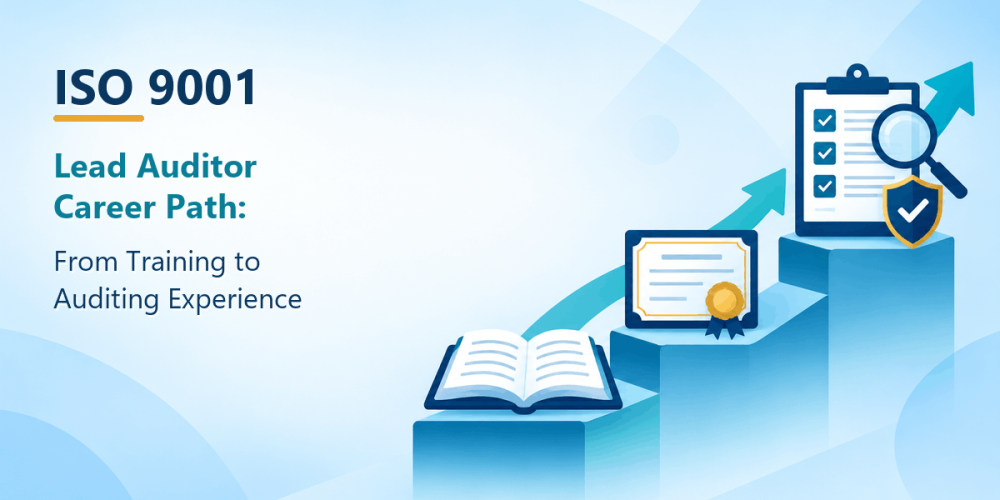

Quick Answer: To become a CQI IRCA-certificated ISO 9001 Lead Auditor, you need to successfully complete an applicable IRCA Certified QMS Auditor/Lead Auditor course and meet the required audit-experience criteria. Completing the course gives you the relevant training certificate, but individual Lead Auditor certification is a separate process.
Introduction
Becoming an ISO 9001 Lead Auditor involves more than completing a training course. If your goal is the CQI IRCA QMS Lead Auditor grade, you need appropriate training and qualifying audit experience before applying for certification.
This guide explains the pathway step by step.
Step 1: Complete ISO 9001 Lead Auditor Training
The first step is completing the applicable QMS Auditor/Lead Auditor training.
The training develops knowledge and skills for planning, conducting, reporting and following up QMS audits.
If you want to understand how virtual training is delivered, read our guide to ISO 9001 Lead Auditor Training Online.
Before enrolling, check that the specific course meets the requirements for the professional pathway you intend to follow.
Step 2: Pass the Required Assessment
Successfully completing the applicable assessment is part of completing the Lead Auditor training.
Passing the course confirms that you have met its training and assessment requirements.
However, a Lead Auditor course certificate and individual CQI IRCA Lead Auditor certification are not the same thing.
You still need the required practical audit experience before applying for the relevant auditor grade.
Step 3: Gain QMS Audit Experience
After completing the applicable training, you need practical experience conducting management-system audits.
According to the CQI IRCA requirements referenced for this article, an applicant who does not already hold the Auditor grade generally needs:
- 7 qualifying audits;
- 35 total audit days;
- 25 days of on-site audit activity; and
- 3 full audits as audit-team leader.
The team-led audits must include at least one other participating auditor.
Important: Always check the latest CQI IRCA requirements before planning or submitting an application because certification criteria can change.
Step 4: Find Suitable Audit Opportunities
Gaining the required audit experience can take time.
Possible opportunities may include:
- internal QMS audits;
- supplier management-system audits;
- cross-department audits; and
- participation in audit teams.
Not every inspection or quality check is automatically a qualifying management-system audit.
Keep clear records of your audit role, dates, duration, scope and activities so that your experience can be verified later.
Step 5: Keep an Audit Log and Supporting Evidence
Do not wait until you are ready to apply before recording your experience.
For each audit, keep relevant information such as:
- organization audited;
- applicable standard;
- audit dates;
- audit scope;
- audit duration;
- your role;
- processes audited; and
- referee details.
Supporting records may also be required to verify your experience.
Keep appropriate evidence while respecting the confidentiality of the organizations you audit.
Step 6: Apply for the Appropriate CQI IRCA Auditor Grade
Once you meet the applicable requirements, you can apply for the relevant CQI IRCA QMS auditor grade.
CQI IRCA evaluates your training and audit experience as part of the application process.
Completing the training course does not guarantee that an application will be approved. Your submitted experience must also meet the applicable requirements.
If you are still developing your audit experience, review the available auditor grades and choose the grade that matches your current qualifications and experience.
ISO 9001 Lead Auditor Course vs Lead Auditor Certification
This distinction is important.
Lead Auditor course completion shows that you successfully completed the applicable training and assessment.
CQI IRCA Lead Auditor certification is an individual professional certification that requires a separate application and qualifying experience.
Therefore, do not describe yourself as a CQI IRCA-certificated Lead Auditor based only on completing a Lead Auditor training course.
If you are new to Quality Management Systems, read What Is ISO 9001? before exploring the Lead Auditor pathway.
Frequently Asked Questions
Does an ISO 9001 Lead Auditor course certificate make me a CQI IRCA-certificated Lead Auditor?
No. Completing the applicable course provides the training certificate. Individual CQI IRCA Lead Auditor certification requires a separate application and qualifying audit experience.
How many audits are required for the CQI IRCA QMS Lead Auditor grade?
Based on the CQI IRCA requirements referenced for this article, someone who does not already hold the Auditor grade generally needs seven qualifying audits totalling 35 audit days, including three audits conducted as an audit-team leader. Always confirm the latest requirements directly with CQI IRCA.
Can internal ISO 9001 audits count towards Lead Auditor experience?
Internal audits may be relevant when they meet the applicable CQI IRCA requirements, including requirements relating to the audit cycle and auditor independence.
Can I become an ISO 9001 Lead Auditor immediately after completing the training?
Completing the training is one stage of the pathway. Individual CQI IRCA Lead Auditor certification also requires the applicable audit experience and a separate certification application.
ISO 9001:2026 Transition Training
ISO 9001:2026 Transition Training helps professionals understand the differences between ISO 9001:2015 and the revised standard. It explains the updated requirements and how they may affect an organisation’s existing Quality Management System.
The training is relevant to quality managers, internal auditors, Lead Auditors, consultants and professionals responsible for maintaining or updating an ISO 9001-based management system.
Conclusion
Becoming a CQI IRCA-certificated ISO 9001 Lead Auditor involves both training and professional audit experience. Completing an applicable Lead Auditor course establishes the training component, while qualifying audits, audit-team leadership experience and the separate certification application form the wider professional pathway.
Ready to Start Your Lead Auditor Training?
See what’s included in 3FOLD’s ISO 9001 Lead Auditor course, or enquire online for a direct quote.
Prefer to ask a specific question first? Enquire online or chat with us on WhatsApp — no course purchase is required to get an answer.