
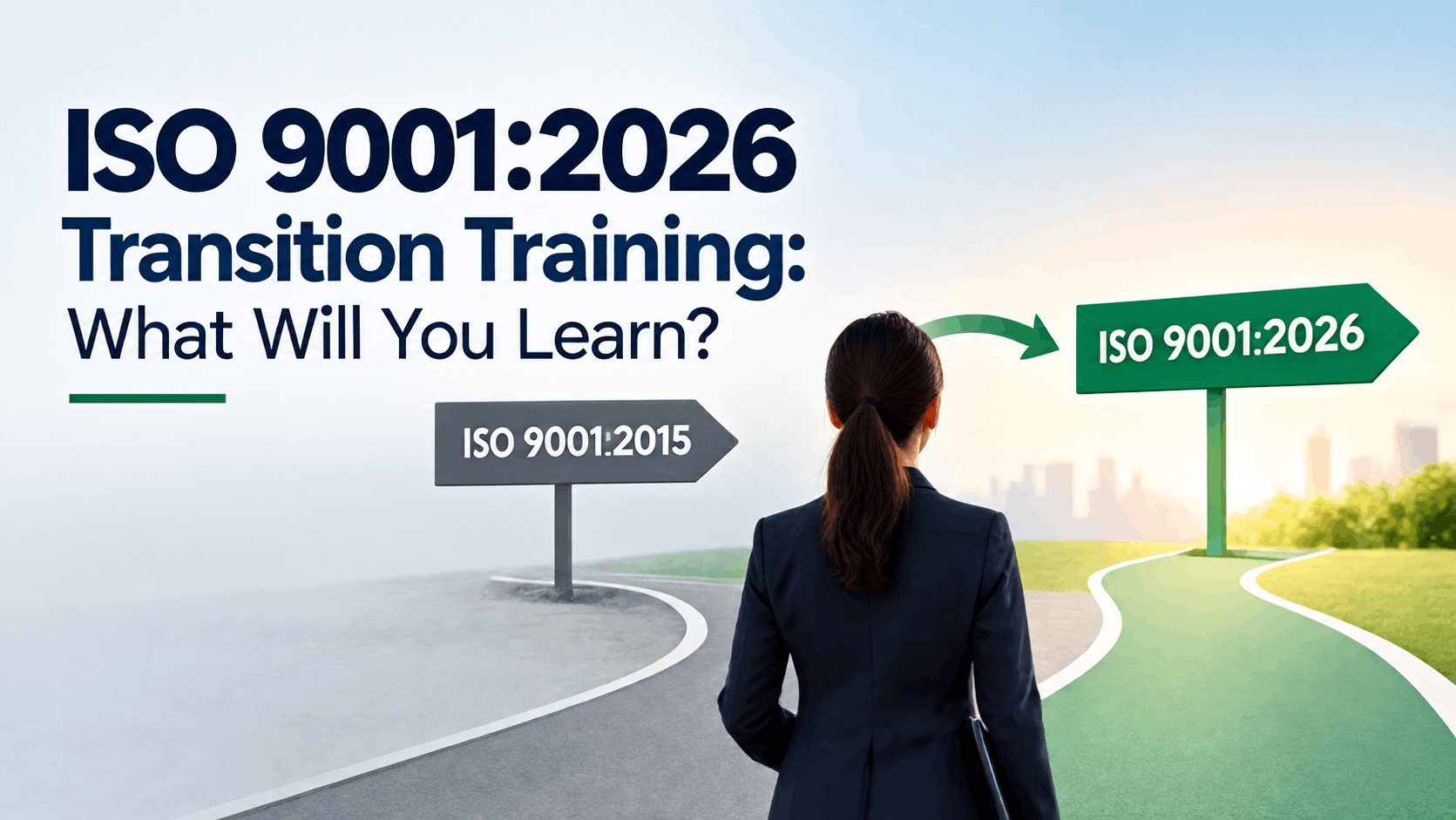
What Does ISO 9001:2026 Transition Training Cover?
ISO 9001:2026 Transition Training helps professionals who already know ISO 9001:2015 understand the changes introduced in the new edition.
It focuses on updated requirements, what they mean for a Quality Management System (QMS), and how auditors and quality professionals can apply this updated knowledge in their work.
What Is ISO 9001:2026 Transition Training?
ISO 9001:2026 Transition Training is updated training for professionals who already have knowledge of ISO 9001:2015.
The main purpose is simple: to help you understand what has changed between ISO 9001:2015 and ISO 9001:2026.
Rather than repeating everything you already know about quality management systems, transition training focuses on the revised areas of the standard and what those updates mean in practice.
This can be useful for auditors, Lead Auditors, internal auditors, quality managers, consultants and other professionals who work with ISO 9001.
You can review the ISO 9001:2026 Transition Training course to see how the training is structured for professionals preparing for the revised edition.
What Will You Learn in ISO 9001:2026 Transition Training?
The exact syllabus depends on the training provider and the final published requirements of ISO 9001:2026.
In general, transition training should help you understand the following areas.
The Main Changes from ISO 9001:2015 to ISO 9001:2026
One of the first things you need to understand is what has actually changed.
Transition training helps you compare the familiar ISO 9001:2015 requirements with the revised edition.
This makes it easier to identify:
- requirements that remain largely unchanged;
- requirements that have been revised;
- areas where expectations have been clarified; and
- new considerations that organizations may need to address.
The goal is not simply to memorize a list of changes. You should understand what those changes could mean when implementing, maintaining or auditing a QMS.
Changes to the Context of the Organization
Understanding an organization's context is already an important part of ISO 9001.
Transition training explains updates to this area and helps you understand how organizations may need to review the internal and external issues that can affect their QMS.
For auditors, this is particularly useful because you need to understand not only what the requirement says, but also what type of evidence may demonstrate that the organization has considered its relevant context.
Leadership and Quality Culture
Leadership has always played an important role in an effective Quality Management System.
The 2026 revision brings further attention to areas connected with leadership and organizational quality culture.
Transition training can help you understand these developments and consider how leadership decisions, behaviour and organizational culture can influence the effectiveness of a QMS.
For an auditor, this means looking beyond procedures and documents. It also means understanding how management supports quality throughout the organization.
Risk and Opportunity
Risk-based thinking is already familiar to professionals working with ISO 9001:2015.
ISO 9001:2026 Transition Training helps you understand how the revised standard approaches risks and opportunities and whether there are changes in how organizations are expected to consider them.
This is important because auditors need to understand how an organization identifies relevant risks and opportunities, plans actions and checks whether those actions are effective.
Planning and Managing Change
Organizations regularly experience change.
A company may introduce new technology, change a supplier, redesign a process, enter a new market or restructure its operations.
Transition training helps you understand the updated expectations related to planning and managing changes within the QMS.
For auditors, the practical question is not simply whether a change occurred. You also need to understand how the organization planned the change and controlled its effect on quality.
Support and Documented Information
Documented information supports the effective operation of a QMS.
During transition training, you can learn about relevant updates or clarifications affecting the way documented information and other supporting elements of the management system are handled.
This can help auditors understand what to look for when reviewing how information is created, maintained, controlled and used within an organization.
Operational Controls and External Providers
Many organizations depend on suppliers, contractors and other external providers.
Transition training can help you understand changes or clarifications affecting operational controls and the management of externally provided processes, products and services.
From an auditing perspective, this is important because supplier control is not only about maintaining an approved supplier list.
You may also need to consider how suppliers are selected, monitored and evaluated based on their effect on the organization's ability to meet requirements.
Performance Evaluation and Management Review
A QMS should provide useful information about how well the organization is performing.
ISO 9001:2026 Transition Training can help you understand updates affecting performance evaluation and management review.
For auditors, this means considering whether management review is genuinely helping the organization evaluate its QMS rather than treating it as a meeting held simply to satisfy a requirement.
Continual Improvement
Continual improvement remains an important part of quality management.
Transition training helps connect the revised requirements with the way organizations identify opportunities to improve their processes and QMS performance.
This may include looking at audit results, customer feedback, performance data, nonconformities, corrective actions and management-review outputs.
The important point is to understand how these sources of information contribute to improvement.
How the Changes Affect Auditing
For auditors, knowing that a clause has changed is only the beginning.
You also need to understand how the change affects the way you audit.
- What evidence should I look for?
- What questions should I ask?
- Does the organization's existing process still meet the revised requirement?
- Has the organization properly addressed a new or revised requirement?
Good transition training should therefore help you connect the changes in the standard with practical auditing situations.
ISO 9001:2026 Transition Training Is Not the Same as Initial Lead Auditor Training
This is an important distinction. Although both relate to ISO 9001 auditing, they are intended to meet different learning needs.
Provides broader learning about understanding and auditing a Quality Management System and develops auditing knowledge and skills for the Lead Auditor pathway.
Updates existing ISO 9001 knowledge by concentrating on changes introduced in the revised edition and what those changes mean in practice.
Therefore, someone who is completely new to ISO 9001 should not view transition training as a replacement for full ISO 9001 auditor or Lead Auditor training.
Who Can Benefit from ISO 9001:2026 Transition Training?
Transition training may be useful for professionals who already work with ISO 9001:2015 and expect to continue working with the revised standard.
This can include:
- ISO 9001 auditors and Lead Auditors;
- internal auditors;
- quality managers;
- QA/QC professionals;
- QMS consultants;
- management-system professionals; and
- professionals involved in maintaining or improving an organization's QMS.
The appropriate training will depend on your existing knowledge, role and professional requirements.
If you already have ISO 9001 knowledge and your main objective is preparing for the revised requirements, see the ISO 9001:2026 Transition Training details before deciding whether transition-focused or broader auditor training better matches your current needs.
What Should You Be Able to Understand After Transition Training?
After completing suitable ISO 9001:2026 Transition Training, you should have a clearer understanding of:
- how ISO 9001:2026 differs from ISO 9001:2015;
- which areas of the QMS may require attention;
- how revised requirements may affect existing processes;
- what the changes mean from an auditor's perspective; and
- where you may need to update your own knowledge before working with the new edition.
The objective is not simply to know that ISO 9001 has changed. It is to understand those changes well enough to apply that knowledge in your professional role.
Frequently Asked Questions
1. What is the purpose of ISO 9001:2026 Transition Training?
ISO 9001:2026 Transition Training helps professionals who already understand ISO 9001:2015 learn about the changes introduced in the 2026 edition and understand how those changes may affect a Quality Management System.
2. What will I learn in ISO 9001:2026 Transition Training?
The training focuses on the differences between ISO 9001:2015 and ISO 9001:2026. Depending on the course syllabus, this may include updates affecting organizational context, leadership, risk and opportunities, change management, support, operations, performance evaluation and continual improvement.
3. Is ISO 9001:2026 Transition Training the same as ISO 9001 Lead Auditor Training?
No. ISO 9001 Lead Auditor Training provides broader training in understanding and auditing a QMS. Transition training is intended to update existing ISO 9001 knowledge by focusing on changes in the new edition.
4. Who should consider ISO 9001:2026 Transition Training?
ISO 9001 auditors, Lead Auditors, internal auditors, quality managers, consultants and other professionals who already work with ISO 9001:2015 may find transition training useful when preparing to work with ISO 9001:2026.
5. Does ISO 9001:2026 Transition Training replace previous ISO 9001 training?
Transition training is generally designed as an update rather than a replacement for previous auditor or Lead Auditor training. Professionals should check the requirements relevant to their own role, certification or organization.
Where to Go Next
Your next step depends mainly on your existing ISO 9001 knowledge. Professionals who already understand ISO 9001:2015 and need to prepare specifically for the revised edition can focus on transition training rather than repeating foundational material they already know.
You can review the ISO 9001:2026 Transition Training course information to check the current training and enrollment details.
Prepare for the ISO 9001:2026 Transition
Already familiar with ISO 9001:2015? Focus your learning on understanding the revised requirements and what they mean for QMS implementation and auditing.
Have a question before enrolling? Enquire online or chat with us on WhatsApp .